
EYES ONLY
SUBSCRIBER ONLY // DO NOT FORWARD WITHOUT PERMISSION
BLACKOPS
FINANCE
FINANCE
COVERT FINANCIAL INTELLIGENCE. INTERCEPTED DAILY.
3 September 2026
DAILY DOSSIER
MISSION BRIEF
Updated 1115 ET
Private employers added 38,000 jobs in August, according to ADP’s release on Wednesday, down from a revised 46,000 in July and short of forecasts.
The composition matters more than the total. Education and health services added 45,000 on their own. Every other part of the private economy, taken together, shed jobs.
Strip out that single sector and private payrolls fell by roughly 7,000 in August. Manufacturing lost 17,000. Professional and business services lost 16,000. Trade, transportation and utilities lost 5,000. Information lost 4,000.
This is not one soft month. The Labor Department’s July report, published on August 7, showed nonfarm payrolls falling 23,000 outright, with the unemployment rate at 4.1% and average hourly earnings up 3.2% over twelve months.
The same report revised the two prior months down hard. May went from 129,000 jobs to 63,000. June went from 57,000 to 20,000. Between them, 103,000 jobs that had already been reported to the public stopped existing.
Rate markets have barely blinked. Futures still price around a two-thirds chance that the Federal Reserve raises rates on September 16. The two-year Treasury yields 4.365% and the ten-year 4.767%, down about two basis points this morning.
Consider what the Federal Reserve is actually deciding on. It sets policy against first prints, and the last three first prints have not survived contact with the revisions. May was overstated by 66,000. June by 37,000. July arrived negative without needing a revision at all. If the pattern holds, the labour market the committee believes it is tightening into is stronger on paper than it is in payroll files.
SPONSORED
Elon Musk Just Did Something He’s Never Done Before
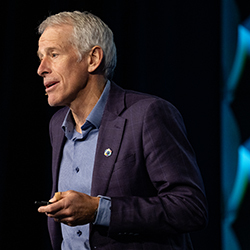
This February, Elon spent millions to send a message to 125 million Americans. Most people ignored it. But Wall Street veteran Whitney Tilson couldn’t stop thinking about it, and says what Elon was really saying explains everything about what’s unfolding in America’s economy right now. He’s sharing his full analysis, free, here.
THE OPERATION
Where the hiring is
Look at where the hiring is coming from, because it is not the cyclical economy. Education and health services is the most publicly funded and least cycle-sensitive large employer in the country. It has been carrying the headline number for months. In the July Labor Department report the only major sector adding jobs was health care, at 22,000, while local government education shed 50,000, retail trade 19,000 and financial activities 14,000.
So the economy is not adding jobs broadly. One defensive sector is adding jobs while the parts that respond to interest rates and business confidence are shedding them. That is a very particular kind of labour market, and it is not the kind that generates wage-driven inflation.
The pay data says the same thing from the other direction. ADP put base pay growth for people who stayed in their jobs at 3.0% over the year. Headline personal consumption expenditures inflation is running at 3.7%. Anyone who kept their job and did not move took a real pay cut.
Those who did move earned 4.7%. The gap between staying and switching is the clearest available measure of whether a labour market has bargaining power, and it is now the difference between losing ground to inflation and just about keeping pace.
Dr Nela Richardson, ADP’s chief economist, pointed at exactly this: “Pay can tell us a lot about today’s choppy hiring. To understand hiring patterns, you have to look deeply into where pay growth is accelerating, where it’s slowing, and for whom.”
The committee itself is not unanimous, and that is the part worth tracking. Chair Kevin Warsh used Jackson Hole to say the Fed’s predominant focus should be on prices, and Governor Michael Barr said the central bank should be prepared to raise if inflation fails to ease. Against them, New York Fed President John Williams has pointed to evidence that inflation continues to ease as the impact of tariffs fades.
Both sides are reading real data. The hawks have a six-month inflation rate running at 4.1% annualised and more than half of price components rising above 3%. The doves have a labour market that lost jobs in July, that is being carried by one defensive sector, and where the typical worker’s pay is falling behind prices. A central bank does not usually get to pick which of those it is facing. This time it has to choose which one it believes.
RULES OF ENGAGEMENT
What Friday actually tests
Two releases land today and neither is out as this goes to press: weekly initial jobless claims at 8:30 Eastern and the ISM services survey at 10:00. Claims are the highest-frequency read available on whether August’s weakness is continuing into September, and the services survey covers roughly four-fifths of American employment.
Friday brings the August employment report. Consensus sits near 58,000 jobs, but treat that as a forecast rather than a number, and weigh it against the fact that the last three first prints have all been revised lower or arrived negative. The revision, when it comes next month, may matter more than Friday’s headline.
Watch the education and health share of any gain. If Friday’s payrolls come in positive but that sector accounts for most or all of it, the underlying picture has not improved regardless of what the top line says.
Watch the front end rather than the long end for the policy read. The two-year at 4.365% is where a September hike gets priced, and the spread to the ten-year sits near 40 basis points. A weak print that fails to bring the two-year down would tell you the market believes the Fed will tighten into softening employment anyway.
Two dates frame the rest of the month. Canada’s matching tariffs on roughly $20 billion of American goods begin on September 8, which adds to the price level the hawks are worried about. The Federal Reserve decides on September 16.
The exposure is a central bank tightening into a labour market that has already turned. Private payrolls rose 38,000 in August only because one publicly funded sector added 45,000. July payrolls fell 23,000. May and June were revised down by 103,000 between them. The typical worker’s base pay is growing at 3.0% against 3.7% inflation. And futures still price two-thirds odds of a rate rise in thirteen days. If Friday confirms the trend, the Fed will be choosing between the inflation it can see in the price data and the employment it can no longer see in the first prints.
Editorial sources: ADP Research, ADP National Employment Report for August 2026, released September 2, 2026 (primary release), including sector detail, pay growth by job-stayers and job-changers and comments from chief economist Dr Nela Richardson; U.S. Bureau of Labor Statistics, The Employment Situation for July 2026, released August 7, 2026 (primary release), including prior-month revisions for May and June; Trading Economics, U.S. 10-year Treasury yield, September rate-hike probability and remarks by New York Federal Reserve President John Williams, September 3, 2026; Saxo Bank market quick take, cross-asset levels and the day’s release calendar, September 3, 2026; Federal Reserve Board, keynote remarks by Chairman Kevin Warsh at the Jackson Hole Economic Policy Symposium, August 28, 2026; U.S. Bureau of Economic Analysis, personal income and outlays for July 2026, released August 26, 2026; NPR, Canadian retaliatory tariff schedule, August 22, 2026.
END OF TRANSMISSION.
EYES ONLY
EYES ONLY
SUBSCRIBER ONLY // DO NOT FORWARD WITHOUT PERMISSION