
EYES ONLY
SUBSCRIBER ONLY // DO NOT FORWARD WITHOUT PERMISSION
BLACKOPS
FINANCE
FINANCE
COVERT FINANCIAL INTELLIGENCE. INTERCEPTED DAILY.
04 August 2026
DAILY DOSSIER
MISSION BRIEF
Intercepted 0936 ET
By Monday evening, attorneys general from twenty-five states had filed in the U.S. Court of International Trade, asking the court to stop a tariff system that began collecting money eleven days earlier. The complaint did not attack one country, one product, or one port. It went after the legal route carrying the charge.
The first route ran through the International Emergency Economic Powers Act until the Supreme Court closed it in February. The White House then shifted the same border operation onto Section 122 of the Trade Act, imposed a temporary ten-percent surcharge, and let that authority expire at midnight on 24 July.
At 12:01 a.m. ET that same day, Customs began using a third route. The Office of the U.S. Trade Representative had opened sixty separate Section 301 investigations, found that every economy in the file had failed one of two forced-labor tests, and ordered new duties on nearly the whole import map.
Seventeen economies, including Canada, Mexico, India, and the United Kingdom, drew a 10% rate. The European Union and Taiwan were topped up to ten percent after existing most-favored-nation duties; Japan, South Korea, and Switzerland were topped up to 12.5%. Most of the remaining economies received the full twelve-and-a-half-percent charge, subject to product exemptions buried across hundreds of pages of tariff codes.
Goods already loaded before the start time received a four-day lane through the border. That lane closed at 12:01 a.m. ET on 28 July. Every nonexempt product entered for consumption after it had to clear under the new schedule, whether the state lawsuit had been filed or not.
The tariff did not vanish when one statute ran out. It changed authority at the same border, on the same day, and kept collecting under a new set of customs codes. The legal fight restarted. The cash flow did not.
The Court of International Trade can test the operation after the filing lands, and the states can ask for an order stopping it. Until a judge signs one, the importer’s entry summary still carries the charge. Customs does not wait for closing arguments.
SPONSORED
BEST EXPLANATION on Options hands down!!
Let's face it - options trading can be confusing.
That's why I put together this free report that explains it using cartoon stick figures:
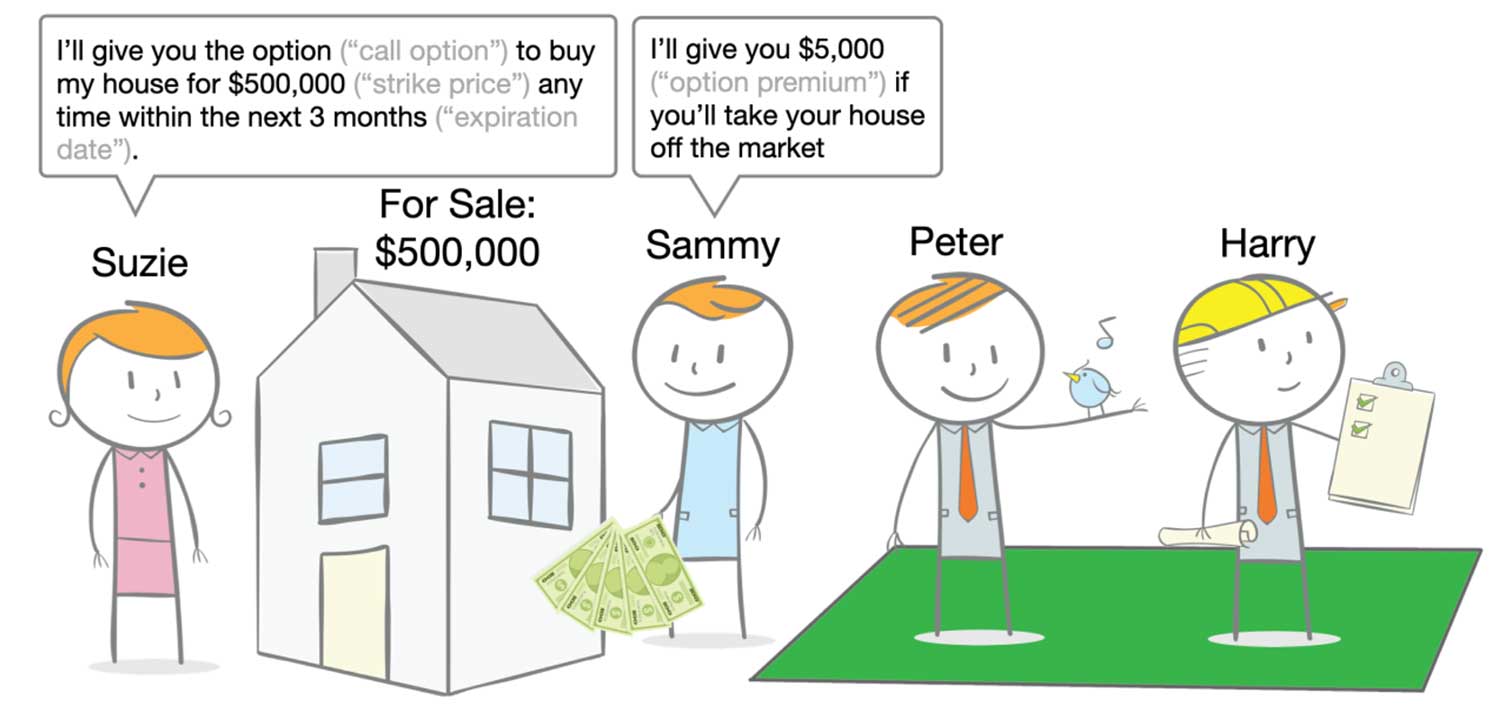
I've been teaching options to regular people since 2001, and this is easily my most popular training of all time.
Here are a few comments from my readers:
• "BEST EXPLANATION on Options hands down!!"
• "Best explanations i've seen on the net so far! great job!"
• "This was so so helpful. The cartoons helped and then all of the sudden, the formal definition just clicked! Thank you!!"
• "Bill Poulos is the first to explain call and put options in a language I understand."
• "I’m not even done... and the explanation is so good I had to comment. Dude you are a great teacher."
This report sells for $29.97 on my website, but today, you can download a copy for free.
The only catch is that the download link will expire, and when it does, you'll have to pay full price on my website.
P.S. This is my #1 most popular options trading report. Normally $29.97 on my website, but free via this backdoor download link:
Click here to get the free version.
THE OPERATION
The customs route
The route begins with an entry filed through U.S. Customs and Border Protection. Census trade records carry the merchandise at its appraised customs value—the price paid for export to the United States—before import duty, freight, insurance, and the charges needed to pull the cargo from the port.
The new Section 301 line is added after that value is declared. A nonexempt product entered at $100 generates a federal charge of $10 or $12.50, depending on origin and existing duties, before the container clears into a warehouse and before a distributor decides which customer receives the bill.
Warehousing does not open a side door. The final notice requires covered goods entering a U.S. foreign-trade zone to take privileged foreign status, preserving the tariff treatment inside the zone until the shipment is withdrawn for consumption. The container can wait behind a fence. The code waits with it.
At 8:30 a.m. Tuesday, the Bureau of Economic Analysis opened the latest ledger. The United States imported $388.0 billion of goods and services in June, including $309.0 billion of goods, while the goods deficit closed at $102.1 billion.
The largest bilateral goods gaps ran through Vietnam at $21.6 billion, Mexico at $20.3 billion, China at $15.3 billion, Taiwan at $14.9 billion, and the European Union at $10.9 billion. Those routes do not all receive the same tariff, and thousands of products carry exemptions, but each customs line now has to be checked against a 431-page action notice and its annexes before the goods can leave federal control.
BEA counts imported goods before duties, freight, and insurance. Customs adds the Section 301 charge after the declared value enters the system, which places the tariff between the government’s trade number and the price printed by the seller. The public sees the first figure months later and the second one at checkout.
The administration routed the operation through sixty findings, a new tariff schedule, and the foreign-trade-zone rules. The states routed their answer through one courthouse in lower Manhattan. Customs kept the only route that collects on arrival.
RULES OF ENGAGEMENT
Your exposure
Start with the categories that lost volume before the new duty even appeared in the June report. Goods imports fell $7.9 billion from May; capital goods fell $2.1 billion, consumer goods fell $2.1 billion, computer imports fell $3.0 billion, and pharmaceutical preparations fell $1.9 billion. Telecommunications equipment went the other way, adding $1.1 billion.
Those figures describe cargo that crossed before the Section 301 action had a full month to operate. The next releases will record the first complete cycle: purchase order, customs value, tariff code, warehouse receipt, distributor invoice, and shelf price. Some firms will absorb the charge, some will press suppliers for a lower price, and some will send it forward.
Watch three files instead of one headline: the Court of International Trade docket for any restraining order, USTR’s Federal Register notices for product exclusions and textile quotas, and the next Census import tables for changes in goods from Vietnam, Mexico, China, Taiwan, and Europe. A lawsuit is not an injunction, and a proposed quota is not an exemption until the customs schedule says so.
The trade deficit fell 5.6% in June because imports fell faster than exports, but the three-month average deficit climbed to $68.5 billion. One monthly print says less cargo entered. The moving average says the pipe remains full.
For every $100 of nonexempt customs value, the new schedule can add $10 or $12.50 before freight, insurance, distribution, and retail margin. The government collects while the lawsuit runs; the importer chooses whether to absorb the charge, force it back through the supply chain, or print it on the next price list. The household never sees the entry form. It sees the shelf tag.
Editorial sources: Office of the U.S. Trade Representative final Section 301 action and Federal Register notice, July 23, 2026; U.S. Bureau of Economic Analysis and U.S. Census Bureau, U.S. International Trade in Goods and Services, released August 4, 2026; Associated Press reporting on the twenty-five-state Court of International Trade filing, August 3, 2026. Sponsored section reproduced verbatim from advertiser-supplied material.
END OF TRANSMISSION.
EYES ONLY
EYES ONLY
SUBSCRIBER ONLY // DO NOT FORWARD WITHOUT PERMISSION
Clearance
This wasn't meant for everyone.
You're here because you already know the official story doesn't add up. One dossier lands every morning, before the market opens. Enter your email for clearance.