
EYES ONLY
SUBSCRIBER ONLY // DO NOT FORWARD WITHOUT PERMISSION
BLACKOPS
FINANCE
FINANCE
COVERT FINANCIAL INTELLIGENCE. INTERCEPTED DAILY.
26 August 2026
DAILY DOSSIER
MISSION BRIEF
Updated 1115 ET
Customs and Border Protection has cleared $86.3 billion for payment back to importers. Total claims entered into its systems run to $121.75 billion, across more than 229,000 applications covering 24.4 million individual import entries.
Those are refunds. In February the Supreme Court ruled the tariffs imposed under the International Emergency Economic Powers Act were unlawful, and the government has been writing checks ever since.
On Saturday, a new set of 50% tariffs took effect on roughly $20 billion of Canadian imports. Alcoholic beverages, dairy, and motor vehicles.
The legal authority this time is Section 338 of the Tariff Act of 1930, a provision that had not been used or seriously threatened in at least seventy years. President Trump signed three proclamations invoking it on July 20. The effective date was set for August 19, then slipped to just after midnight Friday.
Prime Minister Mark Carney answered on Saturday. “You’re at war when you get attacked. We got attacked,” he said, and committed Canada to match the tariffs “dollar for dollar to protect our workers and businesses.” Ottawa’s list covers steel, dairy, appliances, agricultural equipment, pulp and paper, and electronics, starting the Tuesday after Labour Day.
Bond markets barely registered it. The ten-year Treasury sits at 4.65% this morning, a touch firmer on the day, with traders watching falling oil and the next inflation print rather than the border.
The Court did not reduce the tariff power in February. It only invalidated the statute the tariffs were running through. Section 338 needs no investigation, no International Trade Commission finding and no act of Congress. It needs a presidential determination that another country discriminates against American commerce, and it caps out at exactly the rate that was just applied.
SPONSORED
The Next $435B Energy Empire Is Minting
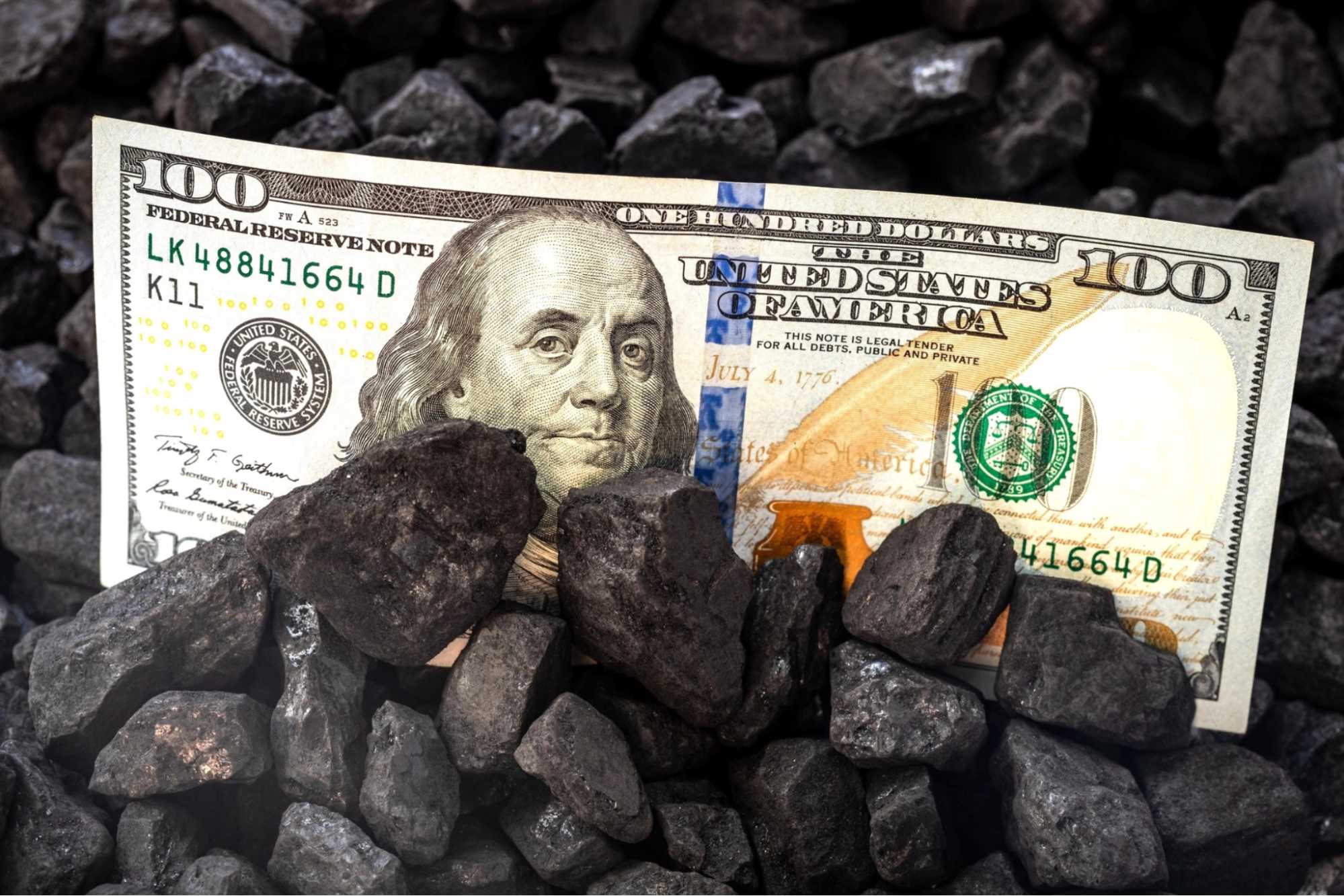
John D. Rockefeller’s empire would be worth $435 billion in today’s dollars. But “oil money” is old news, and something bigger is brewing today:
One company’s patented technology can reform coal into hydrogen and other valuable commodities (like Rockefeller did with oil) without burning it.
That company is Frontieras, and investors have the chance to own their share.
The company officially broke ground on their $850M flagship facility in West Virginia, earning praise from the state’s governor.
They also recently reserved their NASDAQ ticker FASF.
With so many milestones in so little time, this could be investors’ last chance to get in at the current valuation.
THE OPERATION
Read the stacking rule
Read the stacking rule before the rate. Section 338 duties sit on top of everything else already owed. General duties, antidumping and countervailing measures, Section 301 tariffs, all of it, and then 50% on the same entry. The only carve-out is for goods already covered by Section 232, which are excluded outright.
Then read the exemption that is missing. Compliance with the United States-Mexico-Canada Agreement does not exempt a shipment from Section 338. A Canadian vehicle that qualifies for duty-free treatment under the trade agreement the United States negotiated, signed and ratified pays the 50% anyway.
That is the part worth sitting with. The tariff is not a departure from the agreement. It runs beside it, on a separate statutory track the agreement does not reach.
The statute’s test is discrimination, not emergency. IEEPA required a declared national emergency, which is what gave the Supreme Court something to rule on. Section 338 asks only whether a foreign country treats American goods worse than it treats goods from somewhere else. Three proclamations, three sectors, three findings. No hearing required.
The same pivot is running elsewhere. Section 232 investigations have been widened to cover commercial aircraft, jet engines, coal and coal-derived products, with a 180-day negotiating window before aerospace duties could land. A separate forced-labour tariff regime took effect July 24 across 60 economies at 10% or 12.5% depending on whether a country has adopted prohibitions, with agreement-compliant Canadian goods exempted from that one.
Meanwhile the refund machine grinds on. Of the $121.75 billion claimed, about $35 billion has yet to clear, and the Court of International Trade is still working through roughly 3,700 cases covering entries that liquidated outside the eighty-day window.
Two flows are running in opposite directions through the same building. Treasury is paying back $86 billion of tariffs a court said it never had the authority to collect, while Customs starts collecting a new 50% on goods a ratified trade agreement says should cross free. The net fiscal effect is close to a wash. The signal to anyone planning a supply chain is not.
RULES OF ENGAGEMENT
What lands on the invoice
Check the invoice, not the headline rate. Because Section 338 stacks, the number that matters is the total landed duty on a specific entry, which can sit well above 50% once existing measures are counted. Importers who modeled a 50% ceiling on the basis of the statutory cap have the arithmetic backwards.
Watch the Tuesday after Labour Day. Carney has promised to match dollar for dollar across steel, dairy, appliances, agricultural equipment, pulp and paper and electronics. Canada is the largest export market for a long list of American states, and retaliation lands on manufacturers who never sold anything into the three sectors that triggered this.
For anyone holding North American autos, the motor vehicle proclamation is the one to read closely. Vehicles and parts cross the border repeatedly during assembly, so a duty that ignores agreement compliance compounds across each crossing rather than applying once at the end.
Watch Friday morning. Fed Chair Kevin Warsh gives his first Jackson Hole keynote as chair, and he is not expected to commit on September. Tariffs are a price-level event the Fed cannot offset with rates, and this is the first Jackson Hole in years where the inflation question sits partly outside monetary policy.
One last read on the same tape. A market that spent last week bidding gold and bitcoin to multi-week highs, while barely repricing a 50% tariff on a neighbouring economy, is pricing monetary risk carefully and legal risk hardly at all. Statutory authority is the cheapest risk on the board right now, and the least hedged.
The exposure is a legal check that did not hold. A Supreme Court ruling in February appeared to end the tariff program and triggered $86.3 billion in refunds. Six months later the same policy is running at the same rate through a 1930 statute that needs no emergency, no investigation and no vote, stacks on every other duty, and overrides a ratified trade agreement. The refunds are the last war. The proclamations are the next one.
This is a paid advertisement for Frontieras’s Regulation A offering. Please read the offering circular at https://invest.frontieras.com/
Reservation of the ticker symbol is not a guarantee that we will be listed on the NASDAQ. Listing on the NASDAQ is subject to approvals.
Under Regulation A+, a company has the ability to change its share price by up to 20%, without requalifying the offering with the SEC.
Editorial sources: The National Law Review, U.S. trade update on Section 338 tariffs, IEEPA refund litigation and Section 232 expansion, 2026; Wiley Rein LLP client alert, Section 338 proclamations on Canadian imports, July 20, 2026; Blake, Cassels & Graydon LLP, U.S.–Canada tariffs timeline of key dates, 2026; U.S. Customs and Border Protection refund processing figures as of July 10, 2026; U.S. Supreme Court decision on International Emergency Economic Powers Act tariffs, February 2026, as reported by Steptoe, Holland & Knight, WilmerHale, Skadden, Ropes & Gray and Sidley Austin; NPR, Prime Minister Mark Carney remarks and Canadian retaliatory tariff plans, August 22, 2026; Trading Economics, U.S. 10-year Treasury yield and Jackson Hole expectations, August 26, 2026.
END OF TRANSMISSION.
EYES ONLY
EYES ONLY
SUBSCRIBER ONLY // DO NOT FORWARD WITHOUT PERMISSION